How Many Hours of Sleep Do You Need Based on Your Age

How Many Hours of Sleep Do You Need Based on Your Age
Sleep is one of the most important parts of a healthy lifestyle, but the amount of sleep a person needs can change throughout life. A newborn baby may sleep for most of the day, while an older adult may need considerably less. Teenagers often need more sleep than adults, even though their busy schedules can make getting enough rest difficult.
So, how many hours of sleep do you need based on your age?
There is no single number that works for everyone. Sleep needs depend primarily on age, but sleep quality, daily activity, health, lifestyle and individual differences can also affect how much rest a person needs.
Getting enough good-quality sleep can help support concentration, mood, learning, physical recovery and general well-being. On the other hand, regularly getting too little sleep can leave you tired and make it harder to perform at your best during the day.
This guide explains recommended sleep durations by age and provides practical ways to develop healthier sleep habits.
Recommended Sleep Hours by Age
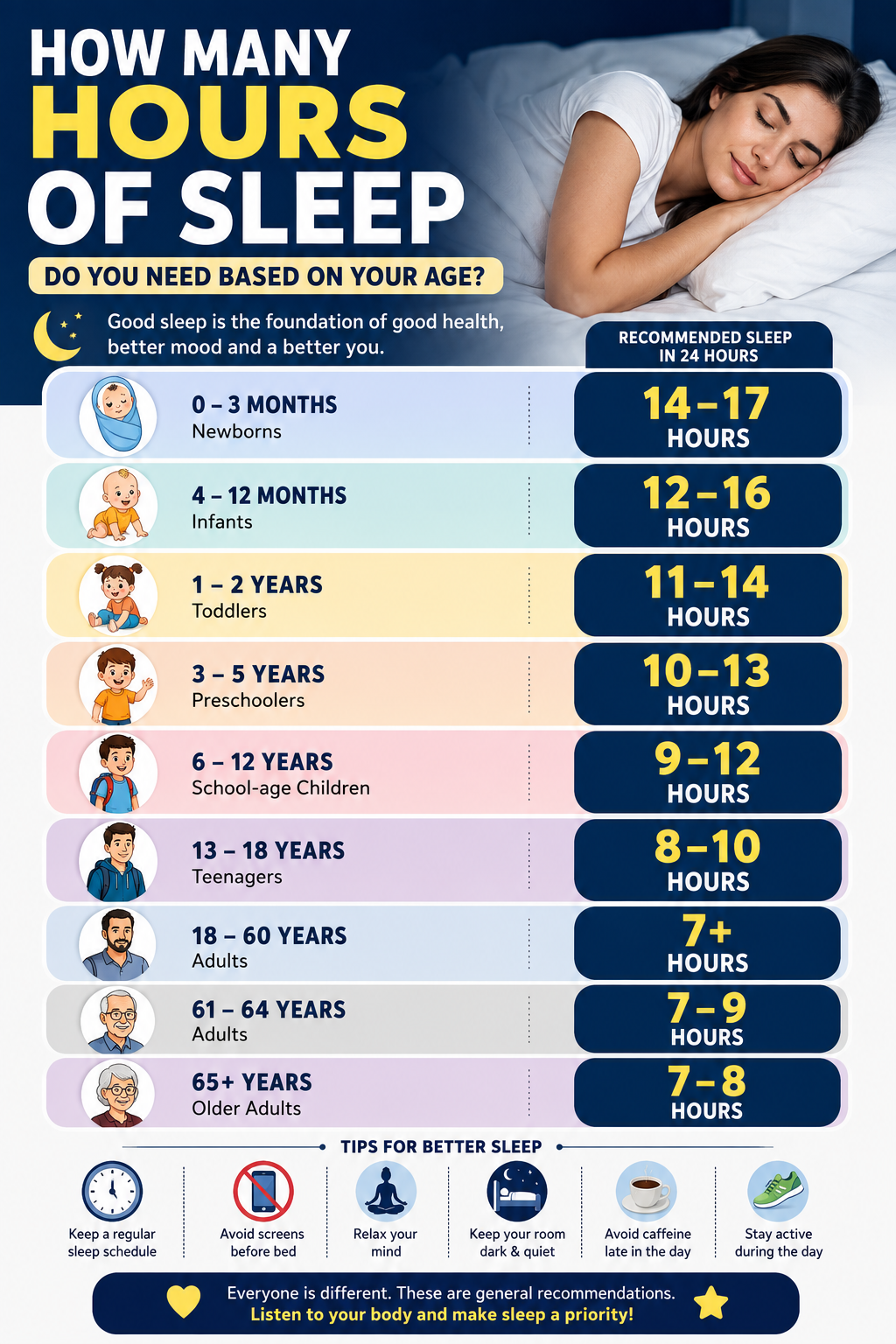
The amount of sleep recommended for different age groups generally follows this pattern:
| Age group | Recommended sleep in 24 hours |
|---|---|
| Newborns: 0–3 months | 14–17 hours |
| Infants: 4–12 months | 12–16 hours, including naps |
| Toddlers: 1–2 years | 11–14 hours, including naps |
| Preschoolers: 3–5 years | 10–13 hours, including naps |
| School-age children: 6–12 years | 9–12 hours |
| Teenagers: 13–18 years | 8–10 hours |
| Adults: 18–60 years | 7 or more hours |
| Adults: 61–64 years | 7–9 hours |
| Adults: 65+ years | 7–8 hours |
These recommendations are useful general guidelines rather than strict rules. Individual sleep needs can vary.
1. Newborns: 0 to 3 Months
Newborn babies need considerably more sleep than older children and adults.
A newborn typically needs around 14 to 17 hours of sleep over a 24-hour period. However, newborn sleep is usually divided into several short periods rather than one long stretch at night.
This happens because newborn babies have not yet developed a mature day-and-night sleep pattern.
Parents may notice that a newborn sleeps for a few hours, wakes for feeding, remains awake for a short time and then goes back to sleep.
At this age, frequent waking is normal.
Parents should focus on creating a safe sleep environment rather than trying to force a strict sleep schedule.
2. Infants: 4 to 12 Months
Babies between four and twelve months generally need 12 to 16 hours of sleep per 24 hours, including naps.
As babies grow, their sleep patterns often become more predictable. Some infants begin sleeping for longer periods at night, although waking during the night can still occur.
Naps remain an important part of the total daily sleep requirement.
A consistent bedtime routine can help babies understand that nighttime is associated with sleep.
Simple habits such as dimming lights, reducing stimulation and following a predictable sequence before bedtime may help establish a regular routine.
3. Toddlers: 1 to 2 Years
Toddlers generally need 11 to 14 hours of sleep in a 24-hour period, including naps.
At this age, children are becoming more active and independent. They may also begin resisting bedtime because they want to continue playing or exploring.
A consistent routine can make bedtime easier.
Parents can try:
- Keeping bedtime around the same time each night
- Limiting stimulating activities before bed
- Creating a calm bedroom environment
- Following a familiar bedtime routine
- Keeping screens away from bedtime when possible
A well-rested toddler is generally better prepared for learning, playing and interacting throughout the day.
4. Preschool Children: 3 to 5 Years
Children between three and five years old generally need 10 to 13 hours of sleep per 24 hours, including naps.
Some preschool children still take daytime naps, while others gradually stop napping.
The transition away from naps can sometimes affect nighttime sleep. Parents should pay attention to the child’s behavior and energy levels rather than focusing only on whether a nap happens every day.
A predictable bedtime routine remains helpful.
Reading a story, brushing teeth and preparing for bed in the same order each evening can provide a sense of consistency.
5. School-Age Children: 6 to 12 Years
Children between six and twelve generally need 9 to 12 hours of sleep each night.
School, homework, sports, hobbies and screen use can all compete with bedtime.
Not getting enough sleep may make it harder for children to concentrate and stay alert during the day.
Parents can encourage healthy sleep by maintaining a regular bedtime and wake-up schedule, including on weekends.
A comfortable, quiet and relatively dark bedroom can also support better sleep.
6. Teenagers: 13 to 18 Years
Teenagers generally need 8 to 10 hours of sleep each night.
This is an important age group because teenagers often struggle to get enough sleep.
School schedules, homework, social activities, gaming, smartphones and other responsibilities can push bedtime later.
There is also a natural shift in the body’s internal clock during adolescence that can make teenagers feel sleepy later at night.
Despite this tendency, teenagers still need adequate sleep.
Creating a regular sleep schedule and reducing late-night screen use can make it easier to get enough rest.
Parents and teenagers can also work together to establish realistic bedtime and wake-up routines.
7. Adults: 18 to 60 Years
Most adults between 18 and 60 should get at least 7 hours of sleep per night.
However, the exact amount that leaves a person feeling rested can differ.
Some adults function well with around seven hours, while others feel better with eight or more.
Work schedules, exercise, stress, family responsibilities and lifestyle habits can all influence sleep.
A common mistake is treating sleep as something that can always be sacrificed when life becomes busy.
Regularly cutting sleep short may make it harder to maintain energy and concentration during the day.
Instead of viewing sleep as lost productive time, consider it part of maintaining your overall health and daily performance.
8. Adults Aged 61 to 64
Adults between 61 and 64 generally need 7 to 9 hours of sleep each day.
Sleep patterns can change as people get older. Some people may wake earlier in the morning or experience more interruptions during the night.
These changes do not necessarily mean that an individual needs significantly less sleep.
Maintaining a regular bedtime, staying physically active during the day and creating a comfortable sleeping environment can help support healthy sleep habits.
9. Adults Aged 65 and Older
Adults aged 65 and above generally need 7 to 8 hours of sleep per day.
Older adults may notice changes in their sleep patterns, including waking earlier, becoming sleepy earlier in the evening or waking more frequently during the night.
The goal should not simply be to spend more time in bed. Quality and consistency matter too.
If sleep problems continue regularly or cause significant daytime tiredness, discussing them with a healthcare professional can be appropriate.
Why Is Enough Sleep Important?
Sleep is not simply a period when the body shuts down. It is an active biological process that supports many aspects of physical and mental well-being.
Adequate sleep can help support:
Memory and learning
Sleep plays an important role in learning and memory. Getting enough rest can help the brain process and retain information.
Mood
Poor sleep can affect mood and emotional well-being. A consistent sleep routine may help people feel more balanced and prepared for daily challenges.
Physical recovery
The body carries out important recovery processes during sleep. Adequate rest is particularly important for people who exercise regularly or have physically demanding routines.
Attention and concentration
Insufficient sleep can make it harder to stay focused and alert.
Daily energy
Getting enough sleep can help you feel more prepared for normal daily activities.
How Do You Know If You Are Getting Enough Sleep?
The number of hours you spend sleeping is important, but it is not the only consideration.
You may need to look at how you feel during the day.
Possible signs that you may not be getting enough sleep include:
- Feeling tired throughout the day
- Difficulty concentrating
- Frequently relying on caffeine to stay awake
- Feeling unusually irritable
- Struggling to wake up
- Falling asleep unintentionally during quiet activities
- Having difficulty maintaining attention
These signs can have many possible causes, so they should not automatically be attributed to lack of sleep.
Does Everyone Need Exactly Eight Hours?
No.
The idea that every adult must sleep exactly eight hours is an oversimplification.
Sleep recommendations are generally expressed as ranges or minimums because individual needs differ.
For adults aged 18 to 60, for example, the general recommendation is at least seven hours per night.
One person may naturally feel refreshed after seven and a half hours, while another may need closer to eight or nine.
The important goal is to get enough sleep consistently and feel appropriately rested during the day.
What Happens If You Regularly Sleep Too Little?
Occasionally getting less sleep than usual is common. Work deadlines, travel, family responsibilities or other events can temporarily disrupt sleep.
The bigger concern is regularly getting insufficient sleep.
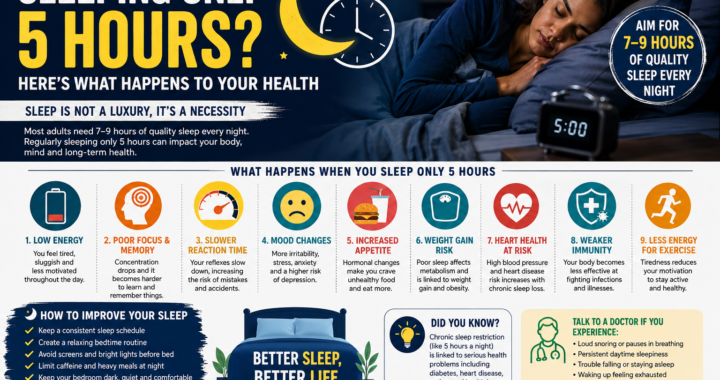
Persistent sleep deprivation can affect alertness, mood, concentration and overall functioning.
People who frequently sleep too little may also find themselves trying to compensate by sleeping much longer on weekends.
While extra sleep may feel helpful after a short night, maintaining a consistent schedule is generally a better long-term approach.
Simple Ways to Improve Your Sleep
You don’t necessarily need complicated techniques to develop better sleep habits.
Try these practical steps.
Keep a consistent schedule
Go to bed and wake up at approximately the same time each day.
Create a relaxing bedtime routine
Give yourself some quiet time before bed instead of immediately switching from work or entertainment to sleep.
Reduce bright light and screens before bedtime
Phones, computers and televisions can keep you mentally stimulated and expose you to bright light.
Try reducing screen use before bed if it interferes with your ability to fall asleep.
Make your bedroom comfortable
A quiet, dark and comfortable bedroom can make sleeping easier.
Be physically active
Regular physical activity can support healthy sleep, although exercising very close to bedtime may not work well for everyone.
Be careful with caffeine
Caffeine can remain in the body for several hours and may interfere with sleep, especially when consumed later in the day.
Avoid relying on alcohol for sleep
Although alcohol can make some people feel sleepy initially, it can interfere with sleep quality and cause nighttime disruption.
What About Naps?
Naps can be useful, particularly for babies and young children whose sleep needs are spread across the day.
For adults, a short nap may sometimes improve alertness.
However, long or late naps can make it harder to fall asleep at night for some people.
If you regularly struggle with nighttime sleep, consider whether your daytime naps may be contributing to the problem.
When Should You Talk to a Doctor About Sleep?
Occasional sleep difficulties are common.
However, persistent problems deserve attention.
Consider speaking with a healthcare professional if you regularly:
- Have difficulty falling asleep
- Wake repeatedly during the night
- Wake much earlier than intended
- Feel extremely tired despite spending enough time in bed
- Snore loudly or experience breathing interruptions during sleep
- Fall asleep unintentionally during the day
Some sleep problems can be related to underlying medical conditions or sleep disorders, so professional evaluation may be appropriate.
Q&A
How many hours of sleep do adults need?
Most adults aged 18 to 60 should get at least 7 hours of sleep per night. Adults aged 61 to 64 generally need 7–9 hours, while adults aged 65 and older generally need 7–8 hours.
Is 6 hours of sleep enough?
For most adults, regularly sleeping only six hours is below the recommended amount. Individual needs vary, but consistently getting less than recommended sleep may affect daytime alertness and functioning.
Do teenagers need more sleep than adults?
Yes. Teenagers aged 13–18 are generally recommended to get 8–10 hours of sleep, while adults aged 18–60 are generally recommended to get at least seven hours.
Do older adults need less sleep?
Older adults may need slightly less sleep than younger adults, but they still need adequate rest. Adults aged 65 and older are generally recommended to get around 7–8 hours.
Is eight hours of sleep always necessary?
No. Eight hours is a useful general target for many adults, but sleep needs vary. Recommendations provide guidance rather than an exact requirement for every individual.
Can I catch up on sleep during the weekend?
Sleeping longer after several short nights may help you feel less tired temporarily, but it is better to maintain a consistent sleep schedule whenever possible.
Final Thoughts
So, how many hours of sleep do you need based on your age?
The answer changes throughout life. Babies need many hours of sleep, children and teenagers need substantial amounts for growth and development, and most adults need at least seven hours each night.
The number on the clock is only part of the picture. Consistency, sleep quality and how you function during the day also matter.
Instead of treating sleep as something to sacrifice when life gets busy, make it a regular part of your daily routine. A consistent bedtime, comfortable sleep environment, sensible screen habits and attention to caffeine can all support healthier sleep.
If you regularly have trouble sleeping or remain unusually tired despite getting enough time in bed, consider discussing the problem with a healthcare professional.
Important: Sleep recommendations are general guidelines and are not a substitute for personalized medical advice.