Sleeping Only 5 Hours? What It Does to Your Health

Sleeping Only 5 Hours? What It Does to Your Health
Getting enough sleep is not a luxury. It is one of the basic requirements for maintaining physical health, mental well-being, concentration, and everyday performance. Yet many people regularly sleep for only five hours because of work, studies, family responsibilities, late-night screen use, stress, or an irregular routine.
If you occasionally sleep for five hours, you may simply feel tired the next day. The bigger concern is when five hours becomes your normal sleep schedule.
For most adults, regularly sleeping only five hours is below the amount recommended for healthy functioning. The American Academy of Sleep Medicine and Sleep Research Society recommend that adults regularly get at least seven hours of sleep per night.
So, what actually happens when you sleep only five hours? The effects can involve your energy, concentration, mood, appetite, metabolism, immune system, and long-term health.
How Much Sleep Do Adults Really Need?
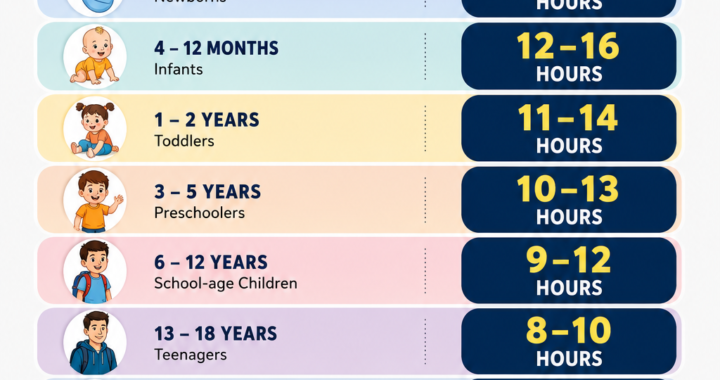
Sleep requirements vary with age and individual circumstances.
For adults, health organizations generally recommend around seven or more hours of sleep each night. Teenagers usually need more, while younger children require considerably more sleep.
The important point is that sleep quality matters as well as sleep duration. Someone may spend eight hours in bed but still wake up tired because their sleep is repeatedly interrupted or because an underlying sleep problem is affecting rest.
Five hours of sleep is therefore not automatically harmful after one unusual night. The concern is regularly getting only five hours when your body needs more.
What Happens When You Sleep Only 5 Hours?
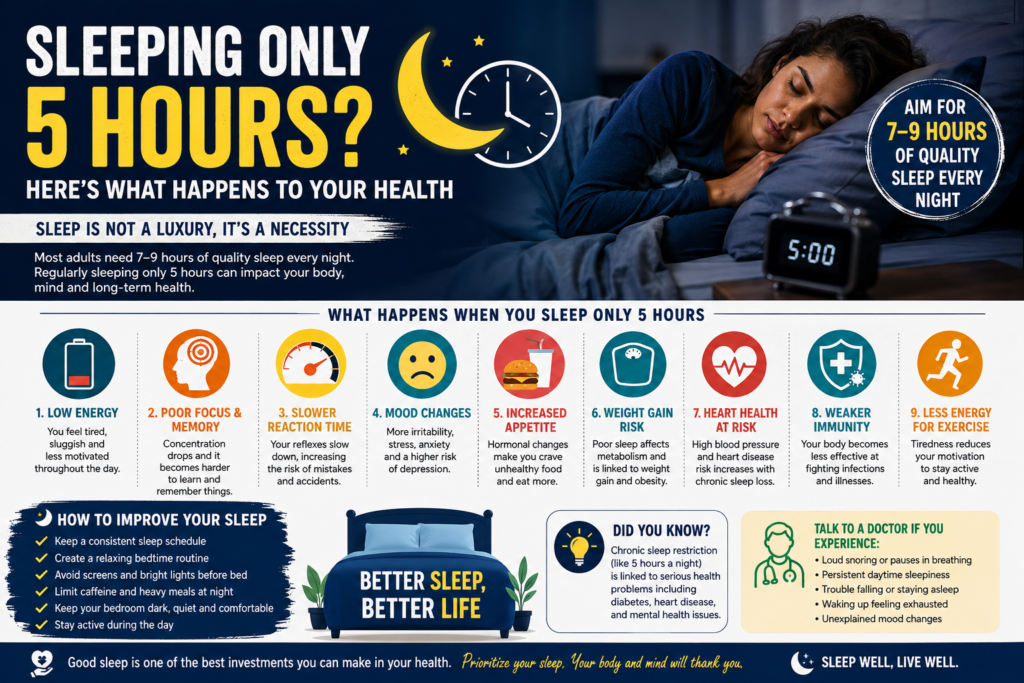
1. You May Feel Tired and Less Alert
One of the most noticeable effects of short sleep is daytime tiredness.
You may wake up and feel as though you have not completely recovered from the previous day. As the day continues, concentration can become harder and normal tasks may require more effort.
Sleep deficiency can affect attention, reaction time, decision-making, learning, and problem-solving.
This can be particularly important if your daily activities involve driving, operating machinery, working at heights, or making important decisions.
2. Your Concentration and Memory Can Suffer
Sleep plays an important role in learning and memory.
When you consistently cut your sleep short, you may find it harder to focus on conversations, remember information, complete detailed work, or stay mentally organized.
You might notice yourself reading the same sentence several times, forgetting small tasks, or becoming distracted more easily.
This does not mean that one five-hour night will permanently damage your memory. However, repeatedly restricting sleep can interfere with normal cognitive performance.
3. Your Reaction Time May Become Slower
Sleep deficiency is not just about feeling sleepy.
It can also affect how quickly you respond to situations. The National Heart, Lung, and Blood Institute notes that sleep deficiency can slow reaction time and increase mistakes.
This is one reason sleep and road safety are closely connected.
If you are extremely sleepy, driving is not a situation where you should simply rely on coffee or willpower. Drowsiness can lead to brief episodes called microsleeps, during which a person may unintentionally fall asleep for a few seconds.
4. Your Mood May Change
Lack of sleep can affect emotional regulation.
After a short night, some people become more irritable, impatient, anxious, or emotionally sensitive. Small problems may feel more frustrating than usual.
When insufficient sleep becomes a long-term pattern, sleep problems have also been associated with mental health difficulties, including depression and anxiety.
It is important, however, not to assume that sleeping five hours automatically causes a mental health condition. Sleep and mental health influence each other, and many different factors can contribute to mood changes.
5. Your Appetite May Change
Sleep is connected to hormones and processes involved in hunger and fullness.
When you do not get enough sleep, your appetite and food choices may change. Some people may feel hungrier or more likely to snack, particularly later in the day.
NIH-supported research has found that restricting sleep to around five hours per night can affect eating behavior and insulin sensitivity.
This is one reason sleep should be considered alongside nutrition and physical activity when discussing healthy weight management.
6. Your Metabolic Health May Be Affected
Your body performs important metabolic processes during sleep.
Long-term insufficient sleep has been associated with metabolic problems, including an increased risk of obesity and type 2 diabetes.
Research does not mean that every person who sleeps five hours will develop diabetes or gain weight. Rather, regularly insufficient sleep is one factor that may contribute to poorer metabolic health.
That distinction is important because health outcomes are influenced by many things, including diet, activity, genetics, stress, medications, and existing medical conditions.
7. Your Cardiovascular Health May Be Affected
Sleep also matters for the cardiovascular system.
Research has linked inadequate sleep with cardiovascular risk factors such as high blood pressure and heart disease.
If you regularly sleep only five hours, particularly if you also have high blood pressure or other cardiovascular risk factors, discussing your sleep habits with a healthcare professional can be worthwhile.
8. Your Immune System Needs Adequate Sleep
Sleep is also involved in the body’s immune function.
Insufficient sleep can affect how the body’s natural defenses respond to infections.
This does not mean that one short night will make you sick. Instead, consistently poor or inadequate sleep may make it harder for your body to maintain normal immune function.
9. You May Have Less Energy for Exercise
When you are tired, exercise can feel more difficult.
You may be less motivated to go for a walk, complete a workout, play a sport, or remain physically active throughout the day.
This can create an unhealthy cycle:
Less sleep → more tiredness → less activity → poorer routine → difficulty maintaining healthy habits.
Improving sleep can therefore make it easier to maintain a balanced lifestyle that includes regular physical activity and nutritious food.
Is Sleeping 5 Hours Once in a While Dangerous?
Not necessarily.
Everyone occasionally has a short night because of travel, work, social events, stress, illness, or other circumstances.
The greater concern is chronic sleep restriction.
If you regularly sleep only five hours and feel tired during the day, struggle with concentration, or rely heavily on caffeine to stay awake, your routine may not be providing enough sleep.
The NHLBI explains that repeatedly losing sleep can create what is known as sleep debt.
Can You Catch Up on Sleep During the Weekend?
Sleeping longer after several short nights may make you feel better temporarily, but it should not be considered a complete solution to chronic sleep restriction.
Research supported by the NIH found that weekend recovery sleep did not fully reverse metabolic effects associated with repeated sleep restriction in a controlled study.
A better approach is to build a sleep schedule that provides enough sleep on most nights rather than depending on weekend catch-up sleep.
How to Move From 5 Hours of Sleep Toward a Healthier Routine
If you currently sleep for only five hours, you do not necessarily need to change everything overnight.
Try making gradual improvements.
Keep a Consistent Sleep Schedule
Go to bed and wake up at approximately the same times each day.
A predictable schedule can help your body’s internal clock establish a more consistent rhythm.
Create a Relaxing Pre-Bed Routine
Give yourself some quiet time before going to bed.
Reading, gentle stretching, relaxation exercises, or listening to calm music may help you transition away from work and other stimulating activities.
Reduce Late-Night Screen Use
Phones, computers, and television can keep people mentally engaged late into the night.
Instead of scrolling indefinitely, consider setting a specific time to put devices away.
Make Your Bedroom Comfortable
A dark, quiet, and comfortable sleeping environment can make it easier to maintain good sleep.
Temperature, noise, lighting, and mattress comfort can all influence the sleeping environment.
Be Careful With Caffeine
Caffeine can remain active in the body for several hours.
If you are struggling to fall asleep at night, consider whether late-day coffee, tea, energy drinks, or other caffeinated products could be contributing to the problem.
Avoid Using Alcohol as a Sleep Solution
Although alcohol may make some people feel sleepy initially, it is not a reliable strategy for achieving healthy, restorative sleep.
If you frequently depend on alcohol or medication to fall asleep, speak with a qualified healthcare professional rather than trying to solve the problem yourself.
Get Regular Physical Activity
Regular daytime physical activity can support overall health and may help establish a healthier sleep routine.
However, if intense exercise late in the evening makes it harder for you to sleep, consider moving your workout earlier.
When Should You Talk to a Doctor About Your Sleep?
Consider discussing your sleep with a healthcare professional if you regularly sleep poorly or experience persistent daytime sleepiness.
You should pay particular attention to symptoms such as:
- Loud or frequent snoring
- Waking up gasping or choking
- Repeated nighttime awakenings
- Persistent daytime sleepiness
- Difficulty falling asleep for long periods
- Difficulty staying asleep
- Regularly waking up feeling exhausted
- Falling asleep unintentionally during the day
These symptoms can sometimes be associated with sleep disorders or other health problems.
For example, sleep apnea can interrupt normal breathing during sleep and is associated with several cardiovascular health problems.
A healthcare professional can help determine whether further evaluation is appropriate.
Five Hours vs. Seven to Nine Hours of Sleep
For many adults, five hours is considerably less than the recommended amount.
A simple comparison:
| Sleep Pattern | General Consideration |
|---|---|
| 5 hours regularly | Usually below adult recommendations |
| 6 hours regularly | Still below the recommended minimum for most adults |
| 7 hours regularly | Meets the minimum recommendation for many adults |
| 7–9 hours | Common healthy range for many adults |
| More than 9 hours | May be appropriate in certain circumstances; persistent excessive sleepiness should be discussed with a professional |
Individual sleep needs vary, so the goal should not be to force yourself to sleep an exact number of hours every night. The goal is to obtain enough good-quality sleep for your age and circumstances.
Frequently Asked Questions
Is 5 hours of sleep enough for an adult?
For most adults, regularly sleeping only five hours is below the recommended amount. Major sleep organizations recommend that adults regularly obtain at least seven hours of sleep.
Can I function normally on 5 hours of sleep?
Some people may feel that they can function on five hours, but feeling accustomed to short sleep does not necessarily mean that performance is unaffected. Sleep deficiency can affect alertness, reaction time, attention, and decision-making.
Can 5 hours of sleep cause weight gain?
Regular insufficient sleep is associated with weight gain and obesity risk, and sleep restriction can influence appetite and metabolic processes. However, weight is affected by many factors, so sleep alone does not determine whether someone gains or loses weight.
Is 5 hours of sleep okay occasionally?
An occasional short night is different from regularly sleeping five hours. The main concern is persistent sleep restriction.
Can weekend sleep make up for 5-hour nights?
Extra sleep may help you feel less tired, but it should not be treated as a complete replacement for getting adequate sleep consistently. Research suggests that weekend recovery sleep may not fully reverse the effects of repeated sleep restriction.
How many hours should adults sleep?
Adults generally need at least seven hours of sleep regularly. Individual needs vary, and sleep quality and regularity also matter.
What if I sleep 8 hours but still feel tired?
Persistent tiredness despite adequate time in bed may indicate poor sleep quality, an irregular schedule, medication effects, or an underlying sleep or health problem. Consider discussing persistent symptoms with a healthcare professional.
Final Thoughts
Sleeping only five hours once in a while is not the same as making five hours your normal routine. However, regularly getting only five hours can leave you tired and may affect concentration, mood, appetite, metabolism, cardiovascular health, immune function, and daily safety.
For most adults, aiming for at least seven hours of regular sleep is a sensible evidence-based starting point.
Instead of treating sleep as time that can always be sacrificed for work, entertainment, or other responsibilities, consider it part of your overall health routine.
If you consistently struggle to sleep, remain exhausted despite getting enough time in bed, or experience symptoms such as loud snoring or breathing interruptions during sleep, speak with a healthcare professional. Identifying the reason for poor sleep is more useful than simply trying to force yourself to sleep longer.
Medical disclaimer: This article is intended for general educational purposes only and does not provide medical diagnosis or treatment. Sleep needs vary between individuals. If you have persistent sleep problems, severe daytime sleepiness, breathing problems during sleep, or concerns about your health, consult a qualified healthcare professional.
Sources for further reading:-
National Heart, Lung, and Blood Institute (NHLBI), National Institutes of Health (NIH), National Institute of Child Health and Human Development (NICHD), and American Academy of Sleep Medicine (AASM).