6 Simple Ways to Support Healthy Hair Growth Without Oiling

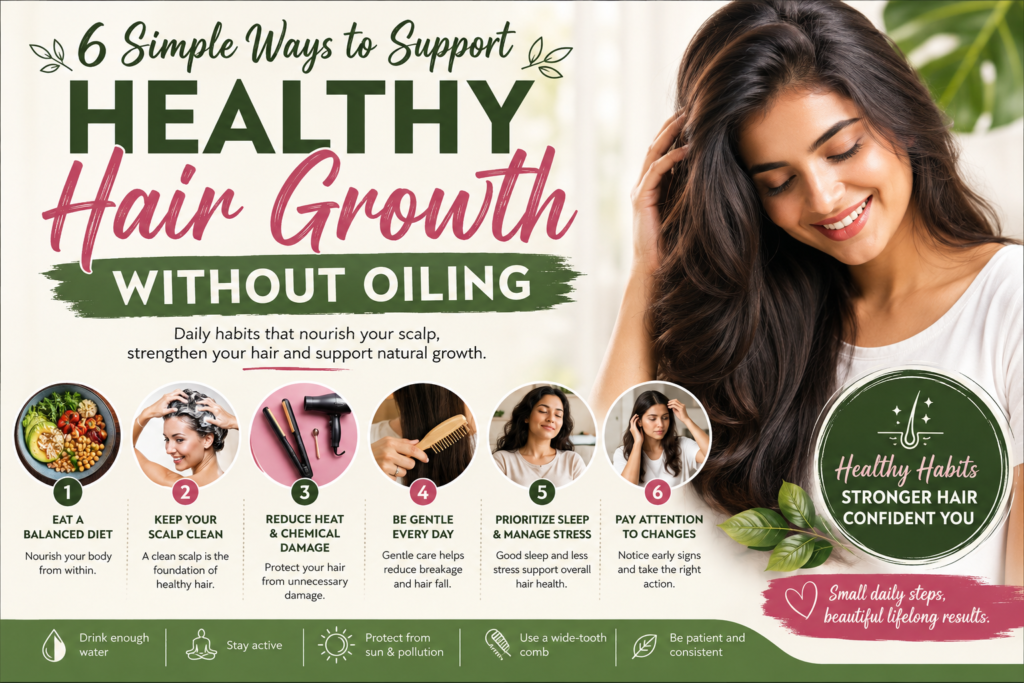
6 Simple Ways to Support Healthy Hair Growth Without Oiling
Healthy-looking hair does not depend on one particular product or treatment. While hair oiling is a traditional part of many hair-care routines, it is not the only way to care for your hair and scalp.
Your everyday habits can also influence the condition of your scalp, hair strands, and overall appearance. A balanced diet, gentle hair care, adequate sleep, stress management, and protection from excessive heat can all contribute to healthier-looking hair.
It is also important to keep expectations realistic. Hair growth is influenced by factors such as genetics, age, hormones, overall health, nutrition, and certain medical conditions. No single habit can guarantee faster hair growth.
If you want to take better care of your hair without making oiling the center of your routine, here are six simple habits worth considering.
1. Eat a Balanced Diet
Hair is made from a protein called keratin, so nutrition plays an important role in maintaining normal hair structure.
Instead of focusing on one “hair growth food,” try to maintain a varied diet that provides protein, vitamins, minerals, healthy fats, and other essential nutrients.
Good everyday choices can include eggs, fish, beans, lentils, dairy products, nuts, seeds, vegetables, fruits, and whole grains, depending on your dietary preferences.
Why nutrition matters for hair
Your body needs adequate nutrients for normal biological processes, including the production and maintenance of hair.
A diet that regularly lacks important nutrients may contribute to hair problems in some people. However, taking additional supplements is not automatically better.
For example, excessive intake of certain vitamins or minerals can also be harmful.
The best approach is to focus on a balanced eating pattern rather than relying on expensive “hair growth” supplements.
A simple approach
Try to include a source of protein in your main meals and add a variety of colorful vegetables and fruits throughout the day.
If you suspect that your diet is lacking a particular nutrient, speak with a qualified healthcare professional before starting supplements.
2. Keep Your Scalp Clean and Comfortable
A healthy hair-care routine begins with the scalp.
Sweat, excess oil, dead skin cells, styling products, and environmental dirt can accumulate on the scalp. Regular cleansing can help keep the scalp clean and comfortable.
However, washing your hair too aggressively or using products that irritate your scalp may cause problems.
The ideal washing frequency varies from person to person. Someone with an oily scalp may need to wash more frequently, while someone with a dry scalp may prefer a less frequent routine.
How to wash your hair gently
Use a shampoo appropriate for your hair and scalp type. Apply it mainly to the scalp rather than aggressively rubbing the entire length of your hair.
Use your fingertips instead of scratching the scalp with your nails.
Rinse thoroughly and avoid using extremely hot water if it makes your scalp feel dry or irritated.
After washing, handle wet hair gently because wet strands can be more vulnerable to stretching and breakage.
Remember
Clean hair does not necessarily mean washing it as often as possible.
The goal is to find a routine that keeps your scalp comfortable without causing unnecessary dryness or irritation.
3. Reduce Excessive Heat and Chemical Damage
Hair can become dry, brittle, or prone to breakage when it is repeatedly exposed to high heat or harsh chemical treatments.
Frequent use of hair straighteners, curling irons, and high-temperature blow dryers can contribute to damage over time.
Similarly, repeated bleaching, coloring, relaxing, or other chemical treatments may affect the structure of the hair shaft.
This does not mean you have to completely avoid styling your hair.
Instead, consider reducing unnecessary exposure and using gentler techniques.
Practical ways to protect your hair
Allow your hair to partially air-dry when practical.
Use the lowest effective heat setting when using a blow dryer.
Avoid repeatedly passing a straightener or curling tool over the same section of hair.
Give your hair breaks between intensive chemical treatments.
Choose hairstyles that do not place excessive tension on the hair.
Use a suitable conditioner to help improve manageability and reduce friction during styling.
Why this matters
Healthy hair growth begins at the follicle, but the visible hair shaft can still become damaged.
Reducing breakage can help your hair retain length and maintain a healthier appearance while it naturally grows.
4. Be Gentle With Your Hair Every Day
Small changes in the way you handle your hair can make a difference to its condition.
Pulling, brushing aggressively, repeatedly tying very tight hairstyles, or roughly drying your hair can contribute to mechanical damage.
Instead, develop a gentler routine.
Use a wide-tooth comb when appropriate, particularly if your hair becomes tangled easily.
Start detangling from the ends and gradually work upward rather than pulling through large knots.
Avoid repeatedly tightening ponytails or buns.
If you regularly wear your hair tied back, alternate hairstyles and avoid placing constant tension on the same area.
Be careful with wet hair
Wet hair can be more susceptible to stretching and breakage.
Instead of vigorously rubbing your hair with a towel, gently squeeze out excess water.
A soft towel or suitable hair-drying method may help reduce friction.
These habits will not magically accelerate hair growth, but they can help reduce unnecessary breakage.
That distinction is important.
Hair growth and hair breakage are not the same thing.
Your hair may be growing normally at the scalp while breakage prevents you from noticing increased length.
5. Prioritize Sleep and Manage Daily Stress
Your hair-care routine is not limited to shampoo and conditioner.
Overall health can also affect the hair cycle.
Periods of significant physical or emotional stress may be associated with temporary increases in hair shedding in some people. Poor sleep can also affect your general well-being and make it harder to maintain healthy lifestyle habits.
You do not need a complicated wellness routine.
Focus on consistent sleep, regular physical activity, nutritious meals, and reasonable stress-management strategies.
Simple stress-management ideas
You could try:
- taking a short walk
- practicing slow breathing
- spending time outdoors
- maintaining a regular sleep schedule
- reducing unnecessary screen time before bed
- pursuing a relaxing hobby
- staying connected with friends and family
These activities are not direct hair-growth treatments.
Instead, they support general well-being, which is an important part of taking care of yourself.
Don’t panic over occasional shedding
Some daily hair shedding is normal.
Hair naturally moves through different phases, including growth and resting phases. The amount of hair a person notices can also vary.
However, sudden, excessive, or persistent hair loss deserves attention rather than being treated only with home remedies.
6. Pay Attention to Changes in Your Hair and Scalp
One of the most useful hair-care habits is simply paying attention to changes.
If you notice that your hair suddenly becomes much thinner, you develop noticeable bald patches, or your scalp becomes persistently itchy, painful, inflamed, or unusually flaky, do not automatically assume that oiling or another home remedy will solve the problem.
Hair loss can have many possible causes.
These may include hereditary factors, hormonal changes, nutritional deficiencies, certain medications, stress-related changes, scalp conditions, and other health issues.
A healthcare professional or dermatologist can help determine the possible cause.
When professional advice may be helpful
Consider seeking professional guidance if you experience:
- sudden or significant hair shedding
- clearly visible bald patches
- rapidly increasing thinning
- persistent scalp irritation
- painful or inflamed areas
- hair loss accompanied by other unusual symptoms
- hair loss that continues despite improving your routine
Getting the cause evaluated is often more useful than trying multiple products without knowing what is responsible for the problem.
What About Hair Oiling?
Hair oiling can be a personal grooming practice and may make some people’s hair feel softer or easier to manage.
However, it should not be presented as a guaranteed method for increasing hair growth.
If you enjoy oiling your hair and it works comfortably for you, you can continue doing it as part of your routine.
But if you do not want to oil your hair, there are plenty of other ways to care for your hair and scalp.
A healthy routine can focus on gentle cleansing, conditioning, nutrition, minimizing damage, and overall well-being.
Do Hair Growth Products Always Work?
Marketing claims can sometimes make hair-care products sound more powerful than they really are.
Words such as “instant growth,” “guaranteed results,” or “permanent regrowth” should be approached cautiously.
Hair growth is a biological process, and results can vary considerably between individuals.
Before buying a product, look at the ingredients, intended use, directions, and available evidence.
Be especially cautious about products that make dramatic claims without explaining how those claims are supported.
If you are experiencing significant hair loss, treating the underlying cause is generally more important than simply purchasing another cosmetic product.
A Simple No-Oil Hair-Care Routine
You do not need a complicated routine with numerous products.
A simple approach could look like this:
Morning:
Eat a nutritious breakfast, stay hydrated, and avoid unnecessarily tight hairstyles.
During the day:
Protect your hair from excessive heat and handle it gently when brushing or styling.
Wash days:
Use a suitable shampoo and conditioner. Clean the scalp gently and avoid aggressive rubbing.
Evening:
Detangle your hair carefully if necessary and maintain a consistent sleep schedule.
Weekly:
Look at the overall condition of your scalp and hair rather than constantly changing products.
Consistency is usually more practical than an elaborate routine that is difficult to maintain.
6 Habits at a Glance
| Habit | Why it may help |
|---|---|
| Eat a balanced diet | Provides nutrients needed for normal body functions |
| Keep the scalp clean | Supports a comfortable scalp environment |
| Reduce excessive heat | Helps minimize hair-shaft damage |
| Handle hair gently | May reduce unnecessary breakage |
| Prioritize sleep and stress management | Supports overall health and well-being |
| Monitor changes | Helps identify when professional advice may be appropriate |
Frequently Asked Questions
Can hair grow without oiling?
Yes. Hair naturally grows from follicles in the scalp, and oiling is not a requirement for normal hair growth. Good nutrition, gentle hair care, and overall health are more important factors to consider.
What is the best daily habit for healthy hair?
There is no single best habit for everyone. A combination of balanced nutrition, gentle hair handling, appropriate cleansing, and minimizing unnecessary damage can support healthier-looking hair.
Does brushing make hair grow faster?
Brushing does not directly make hair follicles produce hair faster. Excessive or aggressive brushing can actually contribute to breakage. Gentle detangling is a better approach.
Can stress cause hair loss?
Significant physical or emotional stress can be associated with temporary increases in hair shedding in some people. Persistent or severe hair loss should be evaluated by a healthcare professional.
Should I take hair-growth supplements?
Not everyone needs hair-growth supplements. Supplements are most useful when a genuine nutritional deficiency or another appropriate reason has been identified. Taking unnecessary high doses of certain nutrients can be harmful.
How often should I wash my hair?
There is no universal schedule. Washing frequency depends on your scalp type, hair texture, lifestyle, sweating, and personal preference. Choose a routine that keeps your scalp clean and comfortable without excessive dryness or irritation.
Can trimming make hair grow faster?
Trimming does not make hair follicles grow faster. However, removing damaged ends may make hair look healthier and can reduce the appearance of split ends.
When should I see a dermatologist for hair loss?
If hair loss is sudden, severe, persistent, patchy, or accompanied by scalp symptoms, professional evaluation is a sensible step. Finding the underlying cause is more useful than relying only on cosmetic products.
Final Thoughts
You do not need to oil your hair every day to maintain a healthy hair-care routine.
Simple habits such as eating a varied diet, keeping your scalp clean, reducing excessive heat, handling your hair gently, supporting good sleep and stress management, and paying attention to unusual changes can all be sensible parts of everyday hair care.
Most importantly, avoid expecting one product or home remedy to transform hair growth overnight. Hair growth is influenced by many factors, and what works for one person may not work for another.
If you experience sudden or persistent hair loss, consider speaking with a qualified healthcare professional or dermatologist instead of relying solely on home treatments.
A simple, consistent and gentle routine is often a better approach than constantly searching for a quick fix.
