Wearable Fitness Technology Guide 2026: How to Choose the Best Fitness Tracker or Smartwatch

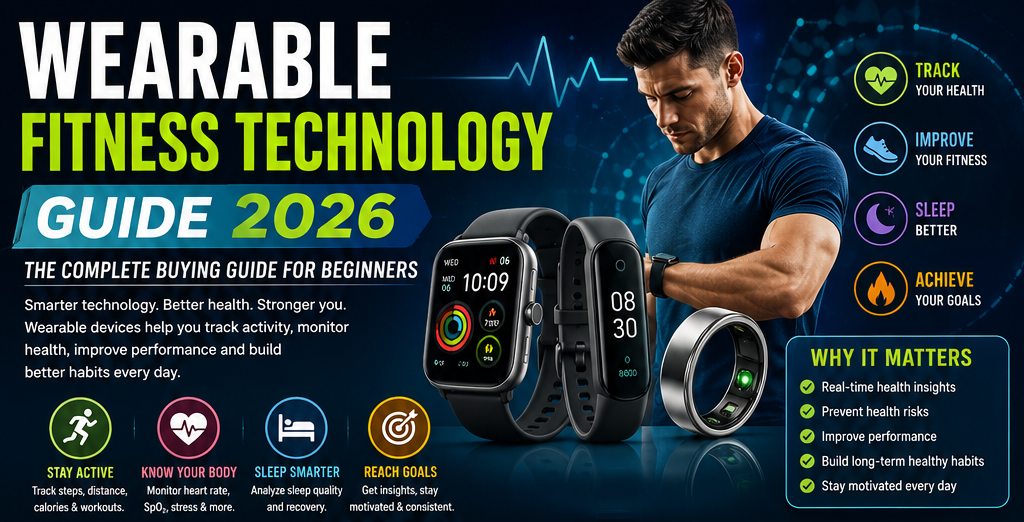
Fitness technology has changed the way people exercise, monitor their health, and achieve personal wellness goals. In 2026, wearable fitness devices have become more accurate, affordable, and intelligent than ever before. Whether you’re taking your first steps toward a healthier lifestyle or looking for a reliable device to support your workouts, wearable technology can provide valuable insights into your daily activity, heart health, sleep quality, and overall fitness progress.
For beginners, the number of available options can feel overwhelming. From smartwatches and fitness bands to smart rings and GPS running watches, every product promises better health tracking and improved performance. However, the best wearable isn’t necessarily the one with the highest price tag. The right choice depends on your goals, budget, lifestyle, and the features you truly need.
This comprehensive guide explains wearable fitness technology in simple language and helps you make an informed buying decision.
What Is Wearable Fitness Technology?
Wearable fitness technology refers to electronic devices designed to be worn on the body while continuously collecting health and activity data. These devices use advanced sensors to monitor movement, heart rate, sleep patterns, calories burned, blood oxygen levels, stress, and many other health indicators.
The information collected is synchronized with a smartphone application where users can view detailed reports, track long-term progress, and receive personalized recommendations.
Unlike traditional fitness equipment, wearable devices work throughout the day, making them useful for monitoring overall wellness rather than just workouts.
Why More People Are Using Fitness Wearables
Millions of people now rely on wearable technology because it provides real-time feedback and encourages healthier habits.
Instead of guessing whether you’re active enough, a wearable device can tell you exactly how many steps you’ve taken, how many calories you’ve burned, and whether you’ve reached your daily activity goal.
Many devices also send reminders to stand, stretch, drink water, or take a short walk after long periods of inactivity.
For beginners, this gentle guidance makes it easier to develop healthy routines without feeling overwhelmed.
Types of Wearable Fitness Devices
Different wearable devices serve different purposes. Understanding each category helps you select the right product.
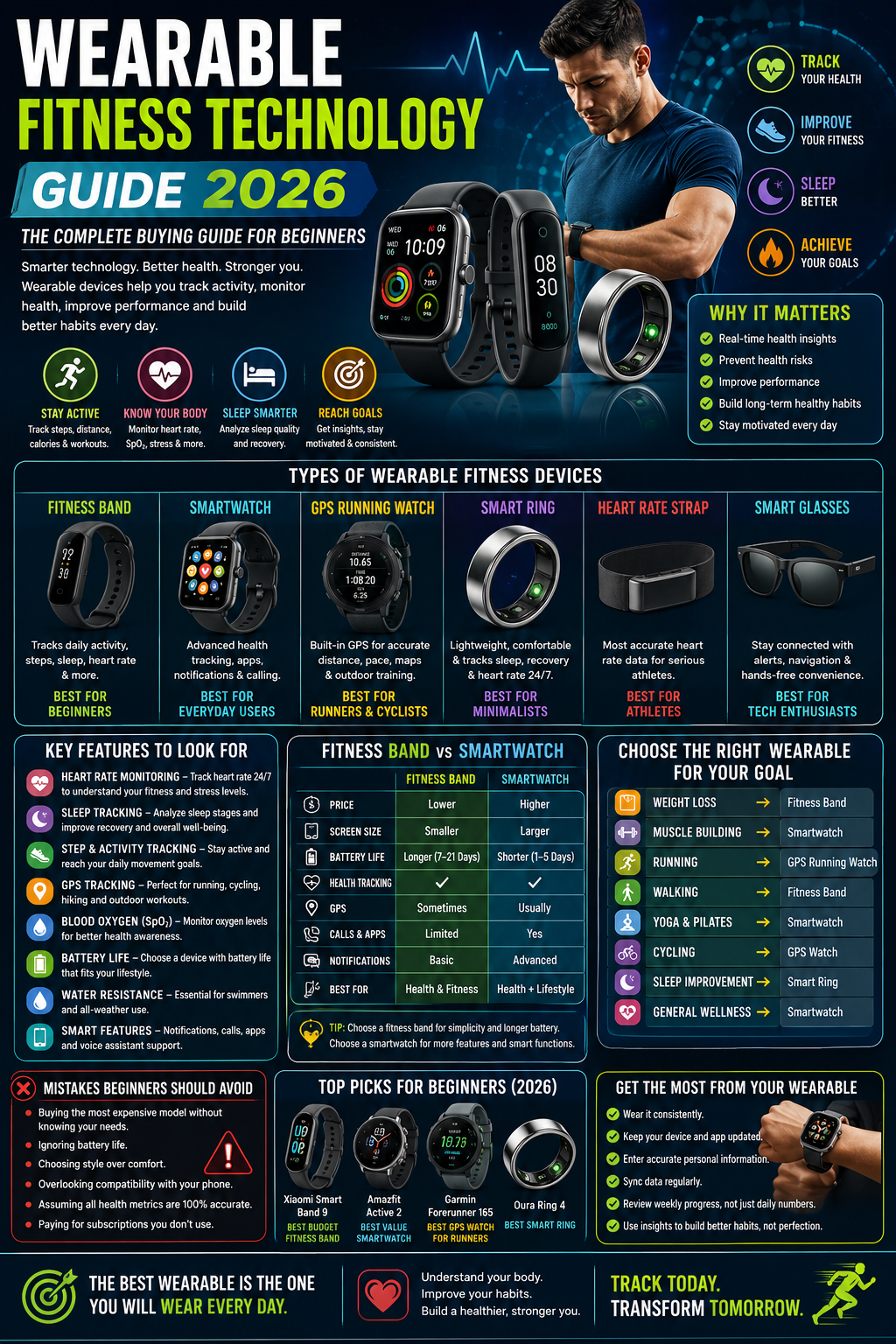
| Device Type | Best For | Main Features | Ideal User |
|---|---|---|---|
| Fitness Band | Daily activity tracking | Steps, calories, sleep, heart rate | Beginners |
| Smartwatch | Overall health and productivity | Calls, apps, GPS, workouts | Everyday users |
| GPS Running Watch | Running and cycling | Accurate distance, pace, maps | Runners |
| Smart Ring | Continuous health monitoring | Sleep, heart rate, recovery | Minimalist users |
| Heart Rate Chest Strap | Accurate heart monitoring | Real-time heart rate | Serious athletes |
| Smart Glasses | Activity and notifications | Navigation, alerts | Tech enthusiasts |
Essential Features to Look For
When buying your first wearable device, focus on features that provide real value instead of marketing buzzwords.
Heart Rate Monitoring
Heart rate monitoring has become one of the most important fitness features.
It helps users understand workout intensity, monitor recovery, and improve cardiovascular fitness.
Modern optical sensors provide continuous heart rate tracking throughout the day.
Sleep Tracking
Quality sleep directly affects energy, muscle recovery, and mental performance.
Wearables now analyze:
- Sleep duration
- Deep sleep
- Light sleep
- REM sleep
- Sleep consistency
These reports help users identify habits that improve rest and recovery.
Step Counting
Although simple, step counting remains one of the most motivating fitness metrics.
Walking 7,000–10,000 steps per day can support overall health for many adults, depending on age and lifestyle.
GPS Tracking
If you enjoy outdoor activities like running, cycling, or hiking, built-in GPS provides accurate information about:
- Distance
- Pace
- Route
- Elevation
- Speed
GPS also eliminates the need to carry your smartphone during many workouts.
Blood Oxygen Monitoring
Many premium wearables estimate blood oxygen saturation (SpO₂), which can provide additional wellness insights, especially during sleep or high-altitude activities. These readings are not a substitute for medical devices but can help users notice trends.
Battery Life
Battery performance varies significantly.
| Device | Typical Battery Life |
|---|---|
| Fitness Band | 7–21 days |
| Smartwatch | 1–5 days |
| GPS Watch | 5–20 days |
| Smart Ring | 4–7 days |
Longer battery life means less charging and more consistent health tracking.
Smartwatch vs Fitness Band
Many beginners struggle to choose between these two popular options.
| Feature | Fitness Band | Smartwatch |
|---|---|---|
| Price | Lower | Higher |
| Screen Size | Smaller | Larger |
| Phone Calls | Limited | Yes |
| Notifications | Basic | Advanced |
| GPS | Sometimes | Usually |
| Battery Life | Longer | Shorter |
| Health Tracking | Excellent | Excellent |
| Apps | Limited | Extensive |
If your primary goal is tracking health and exercise, a fitness band is often enough. If you also want productivity features such as calling, messaging, navigation, and apps, a smartwatch offers greater versatility.
Sensors Inside Modern Wearables
Today’s devices include advanced sensors that collect health data automatically.
Common sensors include:
- Optical heart rate sensor
- Accelerometer
- Gyroscope
- GPS receiver
- Altimeter
- Temperature sensor
- Blood oxygen sensor
- Ambient light sensor
Together, these sensors create a detailed picture of your daily health and activity.
How AI Improves Wearable Fitness Technology
Artificial intelligence has made wearable devices significantly smarter.
Instead of simply displaying numbers, AI analyzes long-term trends and provides personalized recommendations.
Examples include:
- Adaptive workout suggestions
- Recovery recommendations
- Personalized step goals
- Sleep improvement tips
- Stress management reminders
- Exercise intensity analysis
This makes wearable technology feel more like a personal wellness coach than a simple tracking device.
Choosing the Right Wearable for Your Goals
| Goal | Recommended Device |
|---|---|
| Weight loss | Fitness Band |
| Muscle building | Smartwatch |
| Running | GPS Running Watch |
| Walking | Fitness Band |
| Yoga | Smartwatch |
| Cycling | GPS Watch |
| Sleep improvement | Smart Ring |
| General wellness | Smartwatch |
Things Beginners Should Avoid
Many first-time buyers spend more than necessary because they focus on features they may never use.
Avoid these common mistakes:
- Buying the most expensive model without defining your goals.
- Ignoring battery life.
- Choosing style over comfort.
- Overlooking compatibility with your smartphone.
- Assuming every health metric is medically precise.
- Paying for subscriptions you won’t use.
A comfortable, reliable device that you’ll wear every day is usually a better choice than a feature-packed model that stays in a drawer.
Benefits of Using Wearable Fitness Technology
Wearables offer more than just workout tracking. They help users build long-term healthy habits by providing consistent feedback.
Key benefits include:
- Increased daily activity
- Better workout consistency
- Improved sleep awareness
- Easier goal tracking
- Motivation through progress reports
- Personalized insights
- Better understanding of recovery
- Convenient health monitoring
Is Wearable Fitness Technology Accurate?
Modern wearable devices have become increasingly accurate, especially for tracking steps, heart rate during steady exercise, sleep patterns, and outdoor activities with GPS. However, no consumer wearable should be considered a medical-grade diagnostic tool.
For most users, the trends over time are more valuable than any single reading. If you have concerns about your health, always consult a qualified healthcare professional rather than relying solely on wearable data.
How to Get the Most from Your Wearable
To maximize the value of your device:
- Wear it consistently.
- Keep the software updated.
- Enter accurate personal information.
- Sync data regularly.
- Review weekly progress instead of focusing only on daily numbers.
- Use the insights to build sustainable habits rather than chasing perfect scores.
Frequently Asked Questions
Are wearable fitness devices worth buying?
Yes. They help beginners monitor activity, sleep, heart rate, and progress while encouraging healthier daily habits.
Which wearable is best for beginners?
A fitness band is often the best starting point because it is affordable, easy to use, and focuses on the essential health metrics.
Can wearable devices help with weight loss?
They can support weight-loss efforts by tracking activity, estimating calories burned, and helping users stay consistent with exercise and movement.
Do I need GPS?
If you frequently run, cycle, or hike outdoors, built-in GPS is useful. For general fitness and indoor workouts, it is not essential.
How long should a wearable battery last?
Battery life depends on the device. Fitness bands generally last much longer than feature-rich smartwatches.
Final Thoughts
Wearable fitness technology has evolved into one of the most practical tools for improving health and fitness. The best device is not the one with the most features—it is the one that fits your goals, budget, and lifestyle. For beginners, a comfortable wearable that tracks the basics consistently can make a meaningful difference over time.
By understanding the available options, comparing key features, and focusing on what matters most to your personal fitness journey, you can choose a wearable that supports healthier habits and keeps you motivated every step of the way.