How to Create a Successful Morning Routine: Simple Habits for a Healthier and More Productive Day

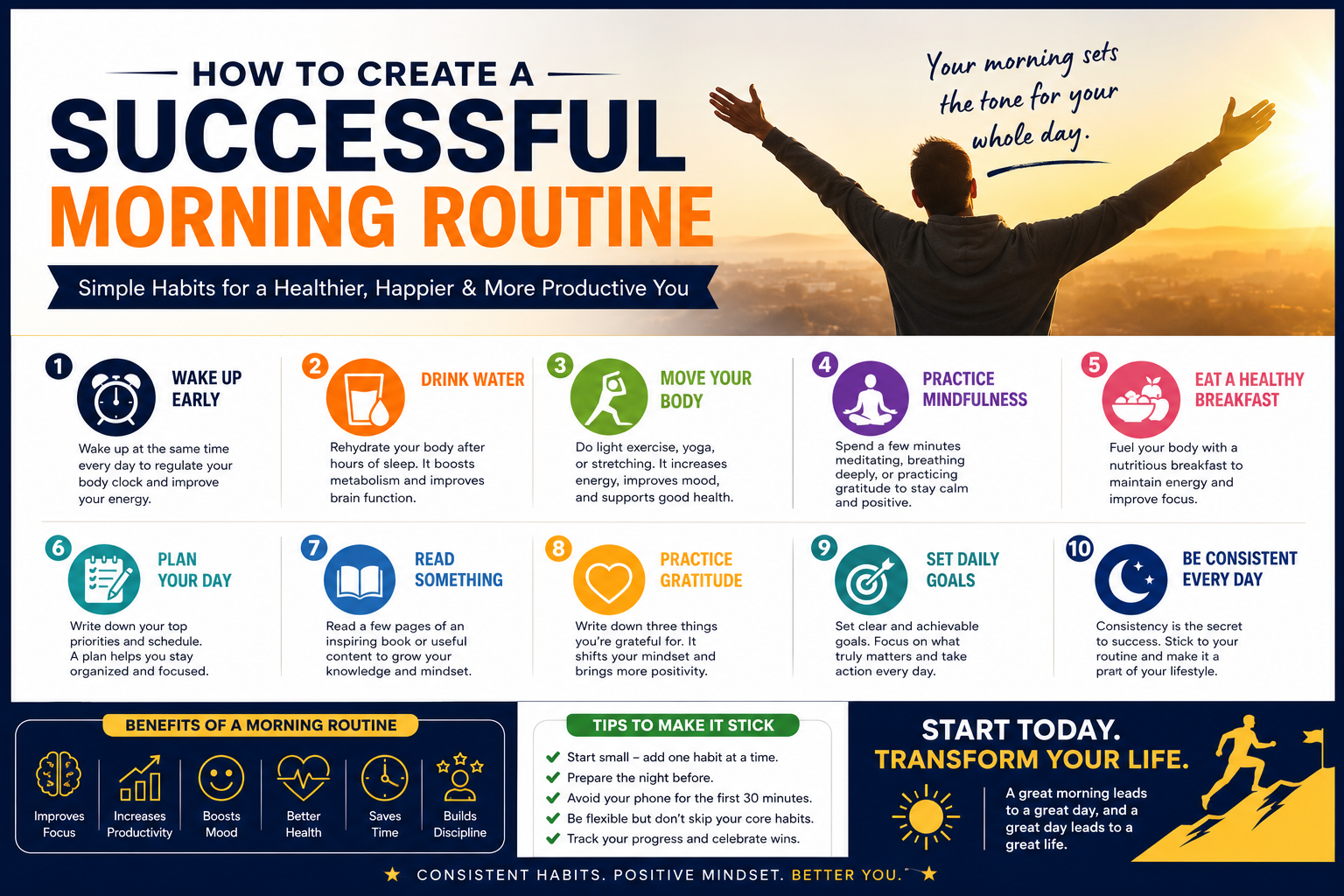
A successful morning routine can completely change the way you live, work, and feel. The first few hours of your day influence your mood, energy, productivity, and overall health. Instead of waking up feeling rushed and stressed, a well-planned morning routine helps you stay focused, motivated, and prepared for the challenges ahead.
Many successful entrepreneurs, athletes, and professionals share one common habit—they follow a consistent morning routine. The good news is that you don’t need to wake up at 4:00 AM or follow someone else’s schedule to enjoy the benefits. The best morning routine is one that fits your lifestyle, supports your goals, and can be maintained every day.
In this guide, you’ll learn how to create a successful morning routine, why it matters, and practical habits that can help improve your physical health, mental well-being, and productivity.
Why a Morning Routine Is Important
Your mornings set the tone for the rest of your day. Starting with healthy habits allows your mind and body to perform at their best.
A structured morning routine offers several benefits:
- Improves focus and concentration
- Increases daily productivity
- Reduces stress and anxiety
- Supports better physical health
- Builds self-discipline
- Creates a positive mindset
- Encourages healthier lifestyle choices
- Helps achieve personal and professional goals
Small habits repeated every morning often produce bigger results than occasional bursts of motivation.
Wake Up at the Same Time Every Day
Consistency is one of the most important parts of building a successful morning routine.
Your body follows a natural internal clock called the circadian rhythm. Waking up at the same time every day helps regulate your sleep cycle, making it easier to wake up feeling refreshed.
Instead of sleeping in on weekends, try maintaining a similar wake-up schedule throughout the week.
Tips:
- Set one alarm only.
- Place your phone away from your bed.
- Avoid hitting the snooze button.
- Go to bed at a consistent time.
Avoid Checking Your Phone Immediately
One of the biggest mistakes many people make is checking emails, social media, or news as soon as they wake up.
Doing this can increase stress before your day even begins.
Instead, spend the first 20–30 minutes focusing on yourself rather than your notifications.
Try replacing screen time with:
- Deep breathing
- Stretching
- Reading
- Meditation
- Journaling
Your mind will remain calmer and more focused.
Drink Water First Thing in the Morning
After several hours of sleep, your body becomes naturally dehydrated.
Drinking a glass of water immediately after waking helps:
- Rehydrate your body
- Improve digestion
- Increase alertness
- Boost metabolism
- Support brain function
Adding a slice of lemon is optional if you enjoy the taste, but plain water works perfectly.
Move Your Body
Morning exercise doesn’t have to be intense.
Even 15–30 minutes of movement can improve circulation, increase energy levels, and release feel-good hormones called endorphins.
Popular morning exercises include:
- Walking
- Jogging
- Yoga
- Stretching
- Cycling
- Bodyweight exercises
- Light strength training
Regular physical activity also supports long-term heart health and weight management.
Practice Mindfulness or Meditation
A peaceful mind helps you make better decisions throughout the day.
Just five to ten minutes of mindfulness or meditation can reduce stress and improve emotional balance.
Simple mindfulness ideas include:
- Focus on your breathing.
- Practice gratitude.
- Sit quietly without distractions.
- Listen to calming music.
- Visualize your daily goals.
Starting your day with a calm mind improves resilience when challenges arise.
Eat a Healthy Breakfast
Breakfast provides the fuel your body needs after fasting overnight.
Choose balanced meals containing:
- Protein
- Whole grains
- Healthy fats
- Fruits
- Fiber
Healthy breakfast examples include oatmeal with berries, eggs with whole-grain toast, yogurt with nuts, or a smoothie packed with fruit and protein.
Avoid sugary foods that may cause an energy crash later in the morning.
Plan Your Day
Taking a few minutes to organize your day helps eliminate confusion and improves productivity.
Write down:
- Your top three priorities
- Important meetings
- Deadlines
- Personal goals
- Workout schedule
- Family commitments
Having a written plan reduces decision fatigue and helps you stay focused on what matters most.
Read Something Inspirational
Reading for just 10–15 minutes every morning stimulates your brain and encourages personal growth.
Consider reading:
- Self-improvement books
- Business books
- Motivational biographies
- Educational articles
- Spiritual literature
Learning something new every day helps expand your knowledge and keeps your mind active.
Practice Gratitude
Gratitude is one of the simplest habits for improving happiness.
Each morning, write down three things you’re thankful for.
These might include:
- Good health
- Family
- Friends
- Career opportunities
- A peaceful home
- Personal achievements
This habit shifts your attention away from negativity and encourages a more optimistic outlook.
Set Daily Goals
Every successful morning routine includes clear intentions.
Instead of trying to accomplish everything at once, identify your most important tasks.
Ask yourself:
- What must I complete today?
- What will move me closer to my long-term goals?
- What can wait until tomorrow?
This simple habit increases productivity and reduces overwhelm.
Keep Your Morning Routine Simple
Many people fail because they try to copy complicated routines from influencers.
A successful morning routine should be realistic.
Start with just three habits.
For example:
- Wake up at 6:30 AM.
- Drink water.
- Exercise for 20 minutes.
Once these habits become automatic, gradually add more.
Consistency is more valuable than perfection.
Common Morning Routine Mistakes
Avoid these common mistakes:
Staying up too late
Poor sleep makes even the best morning routine ineffective.
Skipping breakfast
Missing important nutrients may reduce energy levels.
Constant phone use
Too much screen time creates unnecessary distractions.
Having no plan
Without direction, it’s easy to waste valuable morning hours.
Trying too much too soon
Building habits gradually increases long-term success.
Sample Morning Routine
Here is an example of a balanced morning routine:
6:00 AM – Wake up
6:05 AM – Drink water
6:10 AM – Stretch or exercise
6:35 AM – Meditation
6:45 AM – Healthy breakfast
7:00 AM – Read a book
7:20 AM – Plan the day
7:30 AM – Begin work with focus
Adjust this schedule based on your lifestyle and responsibilities.
Tips for Making Your Morning Routine Stick
Building a new habit takes patience.
Follow these strategies:
- Prepare clothes the night before.
- Sleep at least seven to eight hours.
- Keep your alarm away from the bed.
- Reward yourself for consistency.
- Track your progress in a journal.
- Stay flexible when life gets busy.
- Focus on improvement rather than perfection.
Remember that missing one day isn’t failure. Simply return to your routine the next morning.
Benefits of Following a Morning Routine Every Day
People who maintain healthy morning habits often experience:
- Better physical fitness
- Improved mental clarity
- Higher productivity
- Reduced stress
- Stronger self-confidence
- Better time management
- More consistent energy levels
- Healthier eating habits
- Improved sleep quality
- Greater work-life balance
Over time, these small improvements create lasting positive changes.
Frequently Asked Questions (FAQs)
What is the best time to wake up?
There isn’t a universal best time. Choose a wake-up time that allows you to get seven to nine hours of quality sleep while leaving enough time for your morning habits.
How long should a morning routine be?
A morning routine can be as short as 20 minutes or as long as 90 minutes. The ideal length depends on your schedule and goals.
Can a morning routine improve productivity?
Yes. A consistent morning routine helps organize your day, reduce distractions, and improve focus, making it easier to complete important tasks.
Is exercise necessary in a morning routine?
Exercise is highly beneficial, but even light stretching or a short walk can improve circulation, energy, and mood.
How many habits should I start with?
Begin with two or three simple habits. Once they become consistent, gradually add more activities.
Final Thoughts
Creating a successful morning routine is one of the most effective ways to improve your health, productivity, and overall quality of life. You don’t need an elaborate schedule or expensive tools to get started. Simple habits like waking up at the same time, drinking water, exercising, eating a nutritious breakfast, and planning your day can make a significant difference over time.
The secret is consistency. Small actions performed every morning become lifelong habits that support personal growth and long-term success. Start with a routine that feels realistic, stay committed, and adjust it as your needs change. Over the weeks and months, you’ll notice greater energy, improved focus, and a stronger sense of control over your day.